HEARING VOICES
Crystal Clear Creators, an arts organisation devoted to developing, producing, publishing and promoting new writing, (and funded by a grant from Awards for All (National Lottery funder) is pleased to announce Hearing Voices, a new literary magazine. The magazine is now open to submissions.
Description
Hearing Voices is a triannual magazine of poetry and prose by new, up-and-coming and established writers. The magazine will initially run for a year, and hence include three issues. Each issue will be edited by a guest editor, who will provide feedback on ALL submissions, whether or not they are accepted. Each edition of the magazine will have an ISBN and be professionally designed and printed.
Submission Guidelines
If you would like to submit poetry or prose to Hearing Voices, please send your work as an email attachment (MS-Word document or similar) to cccsubmissions@hotmail.co.uk.
Please:
• include a short (three-line) biography about yourself in the email or on the document.
• send no more than three poems for each issue of the magazine. Poems should be no longer than 60 lines each.
• send no more than one piece of prose (fiction or non-fiction) for each issue, of no more than 1,000 words.
• Please do contact the editor on the email address above, for further information.
THE 2010 ASHAM AWARD for New Women Writers
Think ghost. Or think Gothic. The Asham Award
celebrates its new partnership with Virago by
inviting writers to explore the unknown.
Take your cue from Sarah Waters, one of this year’s
judges, and conjure up a ghost story from the past –
or the present. Or let your imagination run wild and go
Gothic. The choice is yours.
• The Award is open to women writers who have not yet
had a novel or a collection of short stories published.
• Stories must not exceed 4,000 words in length.
• The twelve winning writers will be notified in March 2011
• the first, second and third prizewinners will
be announced in September 2011 at the Small Wonder
short story festival at Charleston, East Sussex.
• All twelve will be published by Virago in the Asham
anthology, alongside specially commissioned stories
by Naomi Alderman, Kate Clanchy, Petina Gappah and
Polly Samson.
•
Sunday, 1 August 2010

Friday, 16 July 2010
UPDATE - JULY 16th
It is a while since I posted an update.
Things are fraught with my father, who is losing his grip on what’s what frighteningly fast. We are close, and have been all my life – it is rather hard. I haven’t felt much like bouncing about. The black dog follows me around quite a bit. However, Dad has a full time live-in carer now – so technically at least, I can get on with things. I see him or talk to him most days. There you go – it’s life.
If anyone has a relative who is going downhill mentally like this, there is a wonderful book entitled “Contented Dementia” which was recommended to me by Tania Hershman. I would like to pass on the recommendation, wholeheartedly. What it advises is counter-intuitive… but works a dream.
A few congrats and general nice things… to Jo Cannon for her forthcoming debut collection, which I will talk about when I can upload a cover image. And to Jo Cannon again, for her short listing for the Brit writer awards in the short story (adult) category. To the aforementioned Tania, for all the wonderful things that are happening, richly deserved… go to her blog for regular updates. To my friend Minnie as in Minniebeaniste for her lovely blog and occasional email natters, which are much enjoyed. I don’t visit regularly enough, but here is one blog that ought to win something… superb writing, fascinating topics, I always come away refreshed and fed. To Carys Davies for her stunning win at the Olive Cook Short Story award run by The Society of Authors, and to Susannah Rickards for her runner up place. Amazing achievements.
Novel Update.
I’m back on track, although there is a constant sadness behind what I do – editing or fresh bits and bobs. The novel was written for my father, really. I suppose I ought to have got on with it a bit faster. He won’t know it when its done, I suspect, although occasionally he looks at me sideways and asks how it goes.
However. Onwards and Upwards. It is currently sitting at 101, 500 and I need to cull 5000 wds, somehow. The novel now also has a new title.
Funny thing, the central image of the work has now been dropped, at least as an overt thing. And I realise the image as metaphor was just guiding me as I wrote… and it has been a fabulous guide. Here’s to Victorian machinery, and here’s to the next piece of work in which it will no doubt appear.
The whole manuscript has now been edited, format-wise, to get rid of too much white space (hard – I work with white space a lot, and in a short story it may work, but in a first novel, maybe not…). About one third of the book (c.34k wds) has been change from present tense to past. And other far more creative and important revisions are under way as well.
Arts Council Grant.
It might be interesting to find out what happens when the schedule goes awry as mine has…as my novel revisions and polishing are being done thanks to an Arts Council Grant for the Arts. When I had to stop working to the initial schedule, I contacted them immediately, and they were marvellous, and gave me an extra few months to complete the work. You need to keep to a timescale, or you don’t get the final 10% of the grant.
So, if this happens to you, get in touch with everyone who is mentioned on your grant paperwork, as soon as possible, as well. All the people who are helping, doing final readings, lending support in kind, etc. etc. Keep everyone up to speed.
I’m due to go to Anam Cara for the week or so paid for by the grant, in August. That’s great, but before then, I want to get at least 50 pages back to Maggie Gee for her wisdom and experience to comment on before then.
I hope to come back with a tighter manuscript, with all those little loose ends snipped off.
Short Story Collection. ‘Storm Warning’.
I’m not in the mood to put a collection of funnies out there, so ‘Ed’s Wife and Other Creatures’has been taken out of the new collection, due out in November. It is now a collection of stories about war and other conflict. How it affects people during and after, often for years. Two thirds flashes and one third stories, including the Fish prizewinner from last year – the title is ‘Storm Warning’, and Chris at Salt has produced the most stunning cover. Endorsements from generous lovely people like Rusty Barnes, Peter James and Tania Hershman. It is available for pre-order on Amazon.
‘Ed’s Wife’
This collection of micro-fictions is under consideration with another publisher – who cant publish at the moment due to the recession – but is hanging on to the project so the door isn’t closed, yet. That’s lovely.
Filling the well…
I remember being advised to take time out when you felt drained, and read, or listen or watch… so that’s what I’ve been doing, whilst keeping up the novel-editing schedule successfully.
Two plays
Among the lovely things I’ve had the privilege of seeing include two plays put on by Curving Road, courtesy of my friend Sue Guiney and The Curving Road team. ‘Dig’ by Anam Cara colleague John D Smith was wonderful, and we had an Anam Cara alumni get together to watch … John over from the States with Paula his wife, Tania up from Brizzle, Sue and self… and terrific to see Sarah Salway too, - all at The Old Red, theatre above a pub.
Three operas.
Firstly, tickets magically appeared free and at the eleventh hour, for the best opera this year at Glyndebourne. Billy Budd, by Benjamin Britten. Really stunning, moving and unforgettable.
Next, Zaide at Sadler’s Wells – an early half-finished opera by Mozart, duly finished off by Ian Page, founder of Classical Opera. Lets put it this way… the singing was great. The orchestra was wonderful, music wonderful. The set was Guantanamo Bay on a bad day. The acting, also Guantanamo Bay on a bad day…and the story – I wouldn’t have bothered if I was Ian Page. Mozart knew a dud when he saw it, that’s why it was unfinished…
MacBeth at Glyndebourne – as I write. Off this afternoon to see/hear this extraordinary production in which the witches are a whole mass of women, some dressed like Myra Hindley, according to some reviews. We’ll see.
Whatever – opera has something – is it the crossover of words, visuals music? The knowledge that it is happeneing in that instant?
I’ve often wondered why I find film so unsatisfactory. I think its because there is nothing risky about it. (apart from financially of course)… its filmed a million times if necessary, to get it right. And the dialogue is often so unreal… but that’s another issue.
Another play…
Pygmalion by Bernard Shaw, at Manchester, the culmination of the loveliest few days in the company of Elizabeth Baines (a marvellous hostess) Tania H and Carys Davies.
Poetry
I did have a lovely surprise – a poem called ‘Spilled Peas’ came in the final 40 out of 1095 entries, at Ver Poets, judged by Gilliam Berkeley. No prize, but publication in the anthology… so runner up, I guess, with a good cohort, and my first poem in print. I attended the adjudication event in St Albans, and enjoyed my first poetry reading event where my reading took less than a minute!
I sent a few poems to Bridport on the wave of Ver Poets euphoria, which has now passed well and truly and that decision now feels rather silly, despite a ‘first timer’s luck’ longlisting a couple of years ago.
It’s nice to work with Caroline Davies via email on our poems – I enjoy that very much.
Reading at Small Wonder Festival
Absolutely delighted to be reading at Small Wonder in September – more on that as and when.
That’ll do. Happy writing. Pics to follow.
Tuesday, 13 July 2010
SALT PUBLISHING NEEDS YOUR HELP...
Well, the book below will appear if the publisher does not under before November. Salt is in trouble again, and asking you to buy Just One Book. This is me doing my bit to help spread the word, because quite apart from 'me me me' here, good independent publishers are like hens teeth. I'd like to see them survive. This is the message from the Director, Chris Hamilton-Emery, taken from the publisher's website. 
I hoped I’d never have to write this note. The recession has continued to have a very negative impact on sales at Salt and we’re finally having to go public to ask you to help support us.
Our sales are now 60% down on last year and have wiped out our grant and our cash reserves as we continue to market and publish what we can from what we believe is a great list. We’ve plans in place to help secure the business from November 2010 — though the books we’ll be publishing won’t deliver any real revenue until 2011. We’re sorry to ask, embarrassed to ask, but we need your help to survive until then and if you were considering purchasing a Salt book, we’d dearly love you to do it right now. We’ve less than one week’s cash left.
If you can help us, please do two things:
1. Buy one book from us — we don’t mind from where, it can be from your local bookstore (they need your support, too), it can be from Amazon or the BookDepository. It can even be directly from us. But please buy that book now.
2. Please tell everyone you know to do the same. Buy just one book and pass it on.
You can visit our Website right now, simply go to
http://www.saltpublishing.com
and buy JustOneBook.
Remember too, that every book you buy gets a raffle ticket in our Big Summer Raffle — and you could win one copy each of the next 20 books we publish from 1 September.
Join us on Twitter and help spread the word.

I hoped I’d never have to write this note. The recession has continued to have a very negative impact on sales at Salt and we’re finally having to go public to ask you to help support us.
Our sales are now 60% down on last year and have wiped out our grant and our cash reserves as we continue to market and publish what we can from what we believe is a great list. We’ve plans in place to help secure the business from November 2010 — though the books we’ll be publishing won’t deliver any real revenue until 2011. We’re sorry to ask, embarrassed to ask, but we need your help to survive until then and if you were considering purchasing a Salt book, we’d dearly love you to do it right now. We’ve less than one week’s cash left.
If you can help us, please do two things:
1. Buy one book from us — we don’t mind from where, it can be from your local bookstore (they need your support, too), it can be from Amazon or the BookDepository. It can even be directly from us. But please buy that book now.
2. Please tell everyone you know to do the same. Buy just one book and pass it on.
You can visit our Website right now, simply go to
http://www.saltpublishing.com
and buy JustOneBook.

Remember too, that every book you buy gets a raffle ticket in our Big Summer Raffle — and you could win one copy each of the next 20 books we publish from 1 September.
Join us on Twitter and help spread the word.
Tuesday, 6 July 2010

Wednesday, 16 June 2010
"Too Many Magpies", among other things

Too Many Magpies, among other things – an interview with novelist, dramatist and storyist Elizabeth Baines

Life throws up strange and seemingly unlikely parallels. How can a potentially fatal fall possibly have anything to do with the work of a gifted and versatile writer?
I stayed with Elizabeth recently. The evening before I arrived, she’d caught her heel in the carpet at the top of a steep flight of stairs and she had fallen, somersaulted, tumbled and finally slid on her back, head first, down the whole flight, hitting her head several times on the wall, on the stair edges, the banisters, and finally cracking it on a heavy piece of furniture at the bottom.
I asked her what she recalled of the accident.
“I felt no pain at all,” she said. “It was like being suspended from life. I couldn’t see, didn’t feel anything. I remember thinking ‘Ok, so that’s probably it now.’ And then when I lay at the bottom I couldn’t shout to John, I just thought as I lay there, ‘Oh shit. I never got to finish the novel’”
Elizabeth is and has long been, a very serious writer, totally committed to her craft, and even at that point where her life was meant to be flashing before her eyes, (that’s meant to happen, isn’t it, when you die, or nearly?) her work was uppermost in her mind. So I asked her if she has seen images from her work, past or present, as she fell.
“The world of my current work was uppermost,” she said. “But I don’t really see my work in terms of images.”
“OK, so how do you see it? Do you see it thematically? Do you see the broader picture – what you want to say? What IS the new novel about?” I do not mean what is the plot, what happens, but rather what is it in her own values, beliefs, preoccupations, that is guiding the work…?
There is a pause.
“it is about falling,” she said. “A man is trying to make something of his life, from bad beginnings. He has to cope and react to sometimes bad events in his life, so falling through life is the best way I can describe it. He falls through life but bounces back over and over.”
Elizabeth said she was trying to put herself in the head of this character – but I suspect she didn’t intend to go so far as to physically fall herself. (!)
Elizabeth is at the end of her hospital-imposed ‘Watch yourself in case your head falls off’ 24 hours. She’s aching all over, but OK, thank heavens, and this is meant to be (like most blog tour stops) a few questions about her latest novel out with Salt Publishing, Too Many Magpies. We seem to have strayed off-topic. But have we??
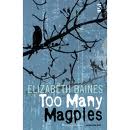
“K, so what would you say Too Many Magpie is about” I ask, again not meaning the plot. Again, she thinks for a moment.
“It is about our relationship with reality. How we think, perceive, interpret. I’m asking the question: ‘Should we see life empirically, or act on intuition?’ I look at how the way we think affects relationships. How our pasts shape our present…”
She stops. “Actually. The new novel could be said to be about those things as well.”
As I said before, Elizabeth is a prolific, serious writer. In addition to Too Many Magpies, which came out from Salt Publishing in 2009, they are soon to publish one of Elizabeth’s most iconic works which is frequently recommended reading for Women’s Studies courses. ‘The Birth Machine’ will come out in its original format later this year. The original publishers insisted on a format change to ‘The Birth Machine’ which drove a coach and horses through her careful crafting of the premise,. And thanks to Salt, the book will be as it was intended. I can’t wait to read it.

In ‘The Birth Machine’, childhood events are woven into a frame in which the wife of a doctor experiences the birth of a child…but again, there are real parallels with the themes of her later work. Exploration of how we think. Our perceptions of reality. The tension between subjectivity and objectivity, broadly speaking. The main character becomes imprisoned in a situation where she is merely an object. The professional’s view of her labour is contrasted with her own, and the two realities, both valid, are very different. ‘The Birth Machine’ was and still is, an important novel – groundbreaking, and subverting the contemporary systems. Have those systems changed that much? Read it to find out!
But back to her fall. Elizabeth’s overriding concern when she really thought she would die, was for her work. “I have nor finished my work”. And the issues that preoccupy her are still fuelling her genius.
I asked her next to what extent she is aware of this. To what extent the consciously plans her work to reflect her passions. I am interested in ‘Too Many Magpies’ in particular here, as it was actually written very differently to the others – very quickly – 8 weeks from start to finish.
“I have a consciousness of the issues when I write,” she said, “but for me, writing has to be done in a daydream state, so as I actually write I am immersed in it and largely unaware of extraneous events.”
However, she also goes on to say that the issues in ‘Too Many Magpies’ have preoccupied her for years, so in effect that novel has been ‘cooking’ for a very long time. I ask what memories she has in particular of relevant preoccupations.
“I remember sitting at the table for meals with my parents, listening to their conversation. My mother was a literary person, and yet was very grounded in reality. My father, an engineer, was her opposite. A scientist who was drawn to intuition, to mystery, instinctive behaviour. There was a real reversal of stereotypes here, and I would ponder all that. I think then, when I was trapped at home with small children, I would ponder the issues again, a lot. I suppose that’s how ones values are set down – and ones patterns of thinking. “Too Many Magpies reflects the contrasts in my parents’ ways of thinking, very much.”
“Did you have a resolution in mind as you wrote it?” I asked.
“Not at all. But when I got to the end of the novel, I found one. And it summed up my own values in this regard very well.”
“And those are?..”
“That one has to be open to potential, to possibility.. Rationality is necessary of course – there is no point in blind belief in magic and so on – but you have to remain open to the possibility that exists in things we have not discovered. Or thought of. That there are more things to consider, beyond the boundaries of our experience. The ‘Unknown Factor’ that the husband in the novel, refers to. He is not a typical scientist. The stranger ‘is’ luck, happenstance, magic… saying all will be well if you ditch your concerns, and believe…”
Suspension of worry. Of suspicion. Just as Elizabeth, as she was falling, was, despite physics, suspended literally, for a short while, and also suspended outside her life, and outside self. As she said, “I felt no pain, could not see, could not speak.”
And this is so similar to how being a writer suspends you, both from life, as you get into the daydream state necessary to create, and also suspends you from society, to s certain extent, unless they understand, empathise, can share what you do and are. In Elizabeth’s case, her daydream state is so almost-total that many times she has not heard the phone or the doorbell, or even her husband John coming into the study – until he puts a hand on her shoulder.
“I have surrendered to something else.” She says. And this resonates the themes of much of her work – our relationship with actuality.
I asked her, finally, about the Baines canon, and whether she sees a progression in her work, a journey.
“I think so,” she said. “I see myself moving towards a fuller examination of the issues that interest me, in ‘Too Many Magpies’. In some of my stories and in ‘The Birth Machine’ I examine oppositions. ‘Too Many Magpies’ is more of a synthesis, a more complex mix.”
I felt that Elizabeth had not looked as closely as this before at the drivers of her creative genius, and I hoped I hadn’t rattled her. But she seemed fine, smiled, got up from the table and put the kettle on to make us a cuppa. And as I watched, she took her hand off the handle of the kettle, and rubbed one of the growing bumps on the back of her head.
Sunday, 30 May 2010
NIK PERRING'S 'NOT SO PERFECT'


I am delighted to welcome the hunky and smashing Nik Perring to the blog today, to talk about flash fiction, and in particular his wonderful collection, 'Not So Perfect' out on June 2nd, from Roast Books.
The book is absolutely gorgeous. And that is just the outside. Inside, you will find some of the best flashes I have read in a while - Nik has really mastered the form and uses it to engage our emotions, to explore what relationships are and do - through the most unlikely events. I love it, and happily endorsed it. And I'm now playing hostess, and passing round tea, toast and cupcakes to the visitors...
So. Sit down Nik, and sit down, book, and here are a few questions for you.
1) It is some years since you wrote 'Last Night I Met a Roman'. People often ask me, 'how did you come to write flash' - which is closer to short stories than a novel - even a novel for children... can you attempt to chart the journey from novel to flash in yourself as a creative being?Hi Vanessa. Thanks for having me here!
It IS some years since I wrote the children’s book! Five years I think, which have gone in a flash!
I think I’ve always naturally tended towards the short form and in all actuality I think I was writing flash fiction before I was even aware of the term. When I first decided to try and be a writer the pieces I’d write were often in the 800 – 2000 word bracket which, I think, even then I’d have classed as a short short story. I still do.
The big moment for me came when I read Sarah Salway’s ‘Leading The Dance’, which is a brilliant collection. Something clicked and I realised that I could write the kind stories I wanted to write and, more importantly, that there was an audience for them. I spent a fair amount of time in writing groups and heard far, far too often that ‘nobody publishes or reads short stories’ so it was a big, big moment.
Then came the really important moment. I read Aimee Bender’s ‘Willful Creatures’. That was an electrifying moment. Seriously, after one story I had to close it and take a deep breath. It was almost like the lightening hitting Frankenstein’s laboratory and bringing the beast to life. I felt at home and comfortable and knew then, with certainty, that it was short stories I loved and short stories I wanted to write. I read Etgar Keret shortly after that, and doing that confirmed everything. So, from then on I was a short story writer.
And as for flash – I’ve been saying this a lot over the past few weeks – I genuinely believe that a story is as long as it is; sometimes that’s short and sometimes it’s long (a novel). I don’t ever consciously set out to write a piece of any given length, it’s just my stories tend to be shorter.
2) Can you say something about the challenges of getting flash fiction right? And how would you answer someone who says there isn't room in such a short wordcount to tell a satisfying story?As I said, a story’s as long as it is, so for someone to say you can’t tell a satisfying story in xyz amount of words is either talking nonsense, or hasn’t read much short fiction (though I would accept that short fiction’s not for everyone, in the same way as certain genres don’t appeal to everyone).
I think that the trick of getting flash right is the same as getting ANY story right: we need good characters, conflicts and good story telling. Maybe with flash we have to get to the point quicker, though I would say that all the writing qualities present in a good novel should be in a piece of short fiction. Except length!
3)If you were asked to do a short workshop on writing flash fiction for complete novices, how would you begin?With a cup of tea.
Oh good. Another slice of toast? Jam? And what then, with the workshop, I mean!Then, then I’d try to get those attending to think about moments. Because, in short fiction that’s what we’re (mostly) dealing with. I think it was Elizabeth Baines who said that ‘a short story is a moment magnified’ (or something similar) and I love that. So yes, moments, points of change, places in people’s lives where something important/interesting/terrifying is about to occur.
4) When I teach flash, I often use the wonderful piece by Tania Harshman, 'Plaits', and suggest the students take the premise, and go off on their own journey to create something allied but different. Which of the stories in 'Not So Perfect' might you use to inspire your students? And why?I LOVE Tania’s ‘Plaits!’ And I’ve used that when teaching too!
Which of mine would I use though? I’m not too sure. I suppose it’d depend on what point I was trying to make. I’m a big fan of magic realism and of making the impossible seem familiar, so perhaps ‘My Wife Threw Up A Lemur’ or the fire-breathing woman in ‘Not Nitro’, or maybe ‘Kiss’ about a man who tells his flowers secrets.
I think the thing I consider most important when teaching is encouraging (or even allowing!) people to write their own stories. They need to know they have the freedom to do that. They need that Aimee Bender moment.
5) Which is your personal favourite flash by any writer at all, out there in the world - and why? tell us why it is so good.That is such a difficult question to answer because there are so many! I will have to give you a bit of a list!
Breaking The Pig by Etgar Keret would be near the top, because it’s just beautiful. Probably perfect.
For showing us what we are as human beings, and for being funny and for just joyous storytelling and clever use of language and honesty, ‘The Meeting’ by Aimee Bender, which you can listen to HERE.
But there are SO many more. Pretty much anything the above two have written. Neil Gaiman’s Babycakes is brilliant too.
6) And which is your personal favourite in Not So Perfect, and again, why?I couldn’t possibly pick one. I like them all and all for different reasons. ‘Seconds Are Ticking By’ I like because it was so easy to write – it came out pretty much fully formed and was published in the brilliant SmokeLong Quarterly. ‘Pacifier’ was like that too. I’ve a soft spot for ‘Kiss’ because, despite being really, really difficult to write, it came out well in the end. I tried and failed to write Shark Boy many times over a period of months so making that something I’m pleased with and proud of is good.
But, right at this moment, (and it’ll change tomorrow) I really like ‘In My Head I’m Venus’.
7) The book is a beautiful object. How important do you think it is for a book to be something of beauty, as well as containing wonderful stories, and wonderful writing, of course?!Well, what’s inside any book, its words, are by far the most important thing. By a long way!
That said, books should be things we enjoy holding and they should be something we enjoy looking at. One of the reasons I wanted to be published by Roast Books was because of their commitment to making books that are as beautiful as objects as they are good to read.
8) can you say something about plans for exploiting the digital explosion, with Not So Perfect? Seems to me the collection seriously is 'Perfect' for reading off screens of all types.Well there is an eBook version. Actually, that’s how the illustrations inside the book came about – they were going to be an extra you could only get in the eBook. After we’d seen them there was no way they weren’t going to be in the paperback – I love them!
So, yes, you can read Not So Perfect on whatever reading device you like: Kindle, Sony, etc etc. And you can even read it on your PC if you want to, by downloading the programme from amazon’s US site.
BIO
Nik Perring is a writer, and occasional teacher of writing, from the north west. His short stories have been published widely in places including SmokeLong Quarterly, 3 :AM and Word Riot. Not So Perfect, his debut collection of short, short stories is published by Roast Books on June 2nd. Nik blogs here (http://nikperring.blogspot.com) and his website’s here www.nperring.com.
Thanks Nik, so much, Not So Perfect, by Nik Perring (in case you'd missed that bit - is out on 2nd June (in case you;'d msissed that bit) from Roast Books. Check it out HERE
And watch out for the next stop on the blog tour, at Tamia Hershman's blog, on 1st June, HERE
Friday, 14 May 2010
100 STORIES FOR HAITI - HIGHLIGHTS
Greg McQueen, a writer living in Denmark, was moved when he saw the Haiti earthquake disaster playing out in the media. He decided to try to do something to help, and hit on the idea of an anthology of short short (1000 wd max) stories to raise funds for the Red Cross and its efforts in Haiti. Six weeks later, not only was there an e-book, but a paperback. Just after that, a selection of stories were recorded for iTunes. The following video is a memento of the highlights in Greg's own journey - six weeks from recording a call for submissions, to opening the box...
On 10th June, there is an event hosted by Waterstones, Brighton, starting at 6.30 pm. Many writers whose work was selected for this project are gathering to read a selection of stories. The books will be available for purchase.
If you can't get there and would like to support his project, please consider buying the anthology direct from the publisher, Bridge House, HERE. I believe at least £6.00 goes to the charity from every purchase.
It is available from Amazon, HERE and can be ordered from any good bookshop, if they aren't stocking it already.
The e-book is available from Smashwords, HERE. - together with the option to 'buy for nothing' and donate separately.
There is also an audiobook produced by the BBC - 'Stories for Haiti' includes 20 selected pieces from the anthology recorded by professional actors and is available on iTunes and Audible.com.
Thursday, 13 May 2010
OPPORTUNITIES FOR WRITERS

First, a marvellous-sounding writing holiday, in the beautiful Loire valley, France. The Circle of Misse has organised courses on writing and gastronomy, led by experienced and gifted tutors, and their website HERE describes the writing courses thus:
The Ultimate Writing Holiday. Past participants say we should call our creative writing courses bespoke because they felt like everything was tailored specifically for them. It was and is. From one-to-one tutorials with award-winning writers to feedback from our resident writer/editor to beautifully prepared meals to satisfy every taste, we make these holidays into what one participant called “a life-changing experience that yields much.” Key to this experience is our intimate course size, never more than six participants. So come accelerate your writing journey with us in the stunning Loire Valley.
Writing colleague Nicholas Hogg – check out his website HERE is among the tutors on what looks like a varied and exciting series. He is leading two courses here– one on turning travels into words, and the other, a writing ‘bootcamp’. Nick’s own motorcycle journey across the emptiness of the Australian outback ended in a crash but inspired his first novel 'Show Me The Sky'.
STOP PRESS! Special discount of 35% if you book quoting V.G.DISCOUNT before May 31st.
 Next, The Asham Award for new Women Writers goes Gothic! This biennial competition for short stories opens for submissions in June. This year they are theming the award, going into partnership with Virago, and asking you to pen your best ghost story or ‘go Gothic. Check out their website HERE from next week for further details. I’m really looking forward to joining the team of readers/longlisters for this one. Should be good!
Next, a new website is being launched on May 27th, in London – a real treasure trove for writers. Deadlines for magazines and journals calls for submissions, and competition closing dates, links to them all, a forum where you can interact with other writers and polish your work. The website is live and growing HERE: www.winningwriters.org.uk. From the website:
Exciting news! We can now confirm that the party to celebrate the launch of Winning Words will be held on Thursday 27th May, at Miss Q's bar in Earls Court Road, London SW5.
I’ll be there, giving a some tips on entering short story competitions, and answering as many questions as are fired. There will also be the chance to buy Short Circuit at a discount.
Saturday, 1 May 2010
TEACHING IN STOCKHOLM - WEEK 1

I am spending a fortnight teaching Creative Writing in the English Department of Stockholm University. I have two groups of students, mostly drawn from departments other than English - many of whom are not studying anything within the Humanities, and want to explore something creative out of sheer interest. I run The Fiction Workhouse, an online workspace for writers, and for a month before arriving here on 23rd April, those students who wished had a chance to write stories and flash, a chance to look at critiques done in an analytical way, a chance to discuss the craft of writing- an ice-breaker.
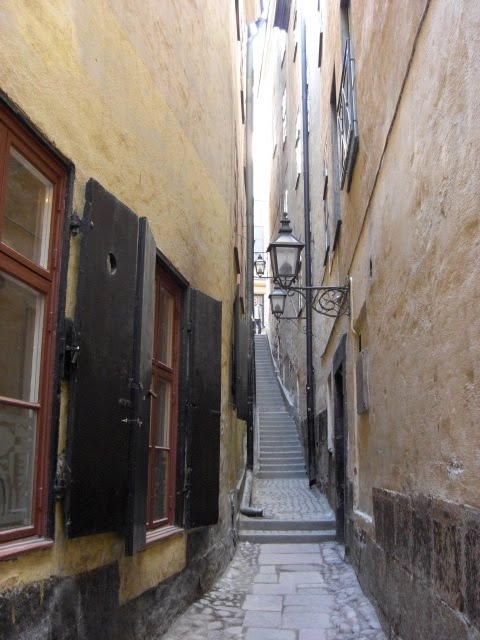
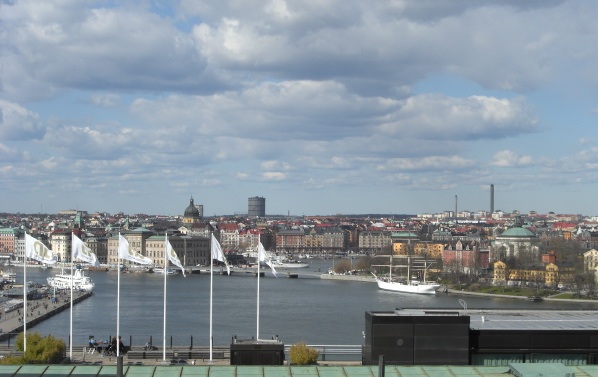
Stockholm is a gorgeous city - I am very lucky to have this opportunity. I am finding the teaching tiring, but when possible, I am out walking, soaking up the atmosphere. The Old Town is lovely - narrow streets packed with shops and restaurants, galleries and homes. The sea is everywhere - but there is no smell of the sea. Without looking at a map you'd think you were on an estuary, in a city built on a hundred islands. The Baltic Sea is very diffferent - and it has its advantages - the Vasa, flagship of the Swedish Navy, which sank in 1628 and was raised in the 1950s - is all but perfectly preserved. No sea worms to eat the timbers. The seven-floor Vasa museum has to be one of the very best I have visited.

I teach for two-hour seminars, given to two groups. So the outline is delivered twice in the same day - but each session ends up very very different, thanks to the different writers in each group, naturally. The reasons for writing, for reading, ways of creating vibrant characters, character voice and writer's voice, structure, the use of language in character - opening narratives and and closing narratives have filled this week. We've also talked at length about the pros and cons of 'writing other', with some hilarious results in the writing exercises that followed. It is hard to tease out one topic without referring to others - the vast net of craft that holds up a story. Each session begins with a fast writing exercise - an opportunity to stretch the creative muscles without planning - there have been some amazing results - it is a real joy to listen to the stories that rise up.
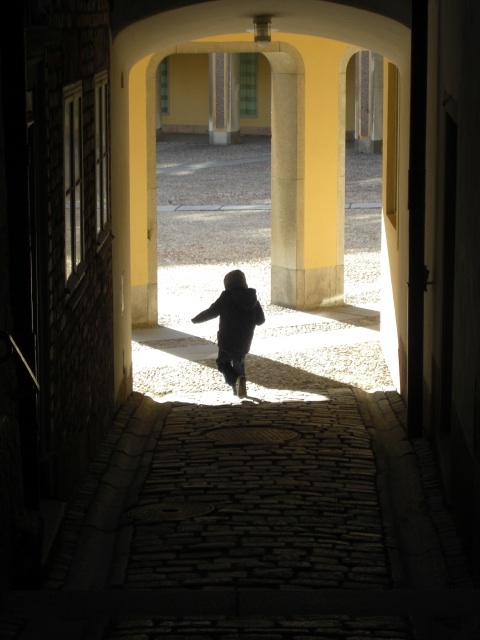 Pic- Faris Mahmutovic playing in the Old Town
Monday, 12 April 2010
WILLESDEN HERALD PRIZE EVENT


A great event on Saturday. An evening at The Dickens House Museum, in Doughty St, London, with readings from some of the authors shortlisted for the 2009 WH Short Story Prize, and a chance to tour this terrific little museum (the only house remaining in which Charles Dickens lived with his family.)
Great to see Stephen and Tess Moran, Anne Mullane and Lane Ashfeldt (organiser, partner thereof, supporters and benefactors of the WH Prize),
Great to also see/meet contributors Henrietta Rose Innes, Nuala ni Chonchuir, Tom Vowler, Wena Poon and Peggy Riley.
Great to see supporters Adam Marek, Julia Bohanna, Claudia Boers, Rob Shearman, Tania Hershman
 Nuala reading poetry in the back kitchen
 Tom Vowler reading in the library.
 Henrietta Rose Innes
A private guided tour round this great place was followed by readings in the library and the back kitchen. Poetry from Nuala, and stories from the others. And the nailbiting moment where Mr Willesden Herald himself opened the envelope telling him and us who had won this year -
"The Architects" by Wena Poon is the winner. And equal runners up are: "Emily Strabnow's Freckles" by Willie Davis and "Falling" by Henrietta Rose-Innes.
 Wena Poon, looking happy about something..Judge Richard Peabody says of Wena’s story:
"In my next life I'm coming back as the brainy talented author of "The Architects." Talk about brazen, submitting a story about a contest to a writing contest. Does it work? Check. The focus might well be on writers—the same dynamics of love, jealousy, sex, and mentors, applies. New York City is captured in amber. Check. Foreign-born exiles get their due. Check. Authentic dialogue squeezes out sparks. Check. Jokes? Check. Do the juggled balls remain in the air? Check. Yes, I want to be this author, who like a sly child with an Erector Set creates miraculous buildings out of thin air."
Congrats to Wena, and to all the finalists this year.
All the winning stories and the shortlisted and commended ones, can be found in Short Stories 3. Available from Pretend Genius Press HERE
Contributors: Wena Poon, Toby Litt, Julia Goubert, Willie Davis, Nuala Ní Chonchúir, Kevin Spaide, Carys Davies, Jonathan Attrill, Peggy Riley, Tom Vowler, Paul McGuire, Jo Cannon, Jarred McGinnis, Henrietta Rose-Innes. ($10/£6.5/€7.5)
 Lane Asfeldt, introducing the readers.
 Frank O'Connor Festival Class of 2008, Rob Shearman, Tania Hershman, self, Nuala Ni Chonchuir, Wena Poon, Adam Marek.
Also - check out Adam's story here, finalist in the Sunday Times Short Story competition.
Thursday, 8 April 2010
THE BLOG IS DEAD, LONG LIVE THE BLOG

Finalamente, the old blog has died. You wouldn't know it to look at it, but believe me, it has died. It has to do with passwords to Google accounts, and therefore to the blogger account linked to said other. It has to do with changing passwords in the middle of the night, in Buenos Aires, worried about hacking, and forgetting I was jet-lagged. Forgetting said password, which was only remembered by Firefox...Thank you Firefox. Until I updated said browser, and zap. Gone.
So welcome to the new blog. And it allows a few changes. For a start, it allows me not to list 'followers'. So - if you wish to follow said blog, feel free. But your piccie will not appear alongside.
It allows a think about what blogs are for. Recent activity on my old one, inspired by another, was great, a discussion on cultural tourism. HERE, complete with elephant traps and a bit of flagellation.
So this blog will be for that, mostly. Interspersed with a bit of news.
Cultural Tourism and Writing Other:
I am not writing at the moment. Nor rewriting, although I can see that coming back soon. I am reading, when I can. In the last few days I have read Philip Pullman's 'Good Man Jesus and the Scoundrel Christ', and re-read most of 'Freedom', an anthology of short stories inspired by the Articles of the Universal Declaration of Human Rights. I have read, among others, 'The Wife', a short story by A S Patric, in Etchings, the rather good Australian Journal of fiction, poetry and artworks. And I have read Maggie Gee's memoir, 'My Animal Life', for the second time.
What strikes me about the first works here, is that they are all examples of writing 'other', in one way or another. Pullman inhabits two characters, Jesus and his twin brother Christ, in this rather disappointing retelling of the old Bible stories. His imagination allows him to leap two millennia and half the world. The publishers, Canongate, heading off some of the predictable (but all the same a marketeer's-dream) controversy, wrap the book in a cover that says 'THIS IS A STORY' in vast gold Bible-similar lettering, on the back. Well yes. Indeed.
I love 'Freedom', and the many stories within, written by such names as Ali Smith, nadine Gordimer, Joyce Carol Oates, Yann Martel, A L Kennedy, Petina Gappah, among others. I also love their ability to inhabit 'others'.
Ali Smith writes first person as Cameroonian male main character.
Marine Lewyke writes first person as a mid-European pimp involved in the white slave trade.
Yann Martel creates a Somali main character, and has him do some rather strange things in Canadian ski resort.... (best story here).
Nadine Gordimer creates a black main character.
Joyce Carol Oates creates Cesar Diaz, a challenging and damaged lad who has been 'turned in' by his own mother, and his lawyer, Zwilich, a man with his own issues.
It strikes me that their ability to cross boundaries, genders, colours, religions, is one of the reasons why these writers were asked to contribute to this anthology. Go for it, writers, but be aware of the elephants!


Subscribe to:
Posts (Atom)